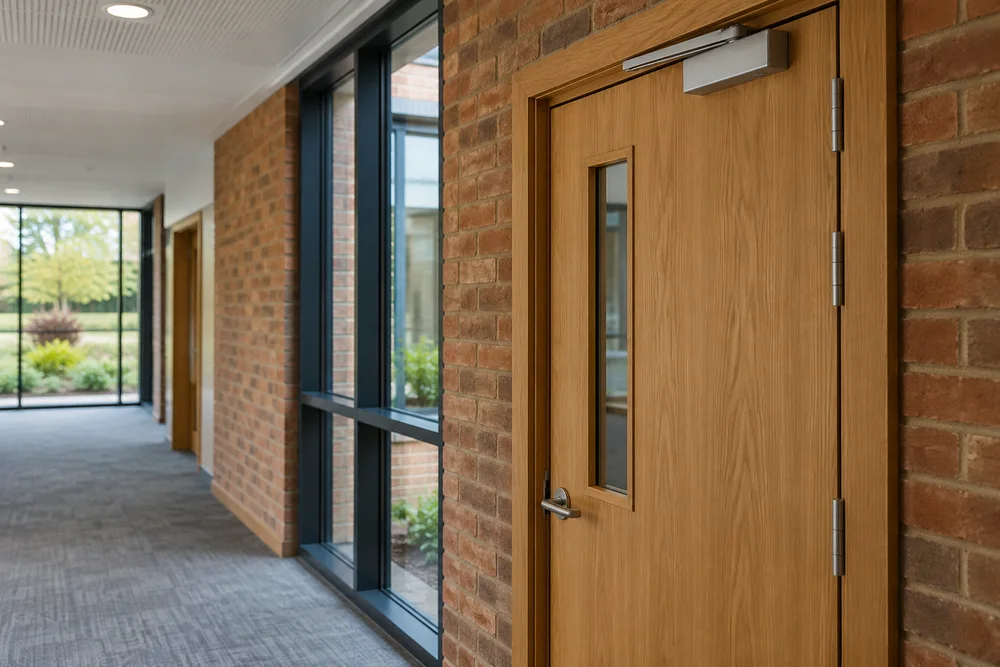
Understand The Condition Of Your Fire Doors
A fire door inspection examines the condition and operation of doors intended to resist the passage of fire and, where relevant, smoke. It looks at the door assembly rather than only the leaf. A sound-looking door can still have problems with closing, seals, glazing, hardware or the way it fits its frame.
This service is for commercial property managers, schools, offices, warehouses and other business premises. It provides a more detailed door-focused record than the general observations made during a fire risk assessment. Agree the inspection method and level of investigation before comparing proposals or commissioning remedial work.
Why Door Defects Matter
Doors protecting stairs, corridors and higher-risk rooms form part of the building’s fire precautions. Damage or alteration can affect their intended performance, while a door that does not close may leave an escape route exposed. Wedges, replacement locks and changes to floor finishes can also interfere with operation.
Not every heavy door is a fire door, and appearance alone cannot establish a fire-resistance rating. Existing certification, drawings and reliable product information can help identify the intended assembly. Where that evidence is absent, the report should distinguish visible condition from conclusions that cannot be supported.
Legal Context For Commercial Premises
The Regulatory Reform (Fire Safety) Order 2005 includes duties concerning the maintenance of relevant fire precautions in England. The fire risk assessment helps identify which doors protect the escape strategy and what condition or further investigation is needed. Inspection frequency should reflect risk, usage, condition and the relevant management arrangements.
Do not apply the specific door-check frequencies in the Fire Safety (England) Regulations 2022 to all commercial buildings. Those provisions have a defined scope for certain multi-occupied residential buildings. Our service here is for business premises, with the appropriate inspection programme agreed for the building rather than borrowed from a different type of occupancy.
What A Visual Inspection Can Cover
The inspection can record door location, visible identification, leaf and frame condition, closing action and accessible hardware. It can consider the condition of seals, glazing and visible gaps as appropriate to the door evidence available. The written schedule should allow a manager or contractor to find the same door without confusion.
A visual inspection has limits. It cannot establish the construction of every concealed fixing or prove performance in a fire. Where opening up, specialist investigation or replacement design is needed, that should be recommended expressly rather than implied by a general statement that a door has been checked.
A Traceable Inspection Process
- Agree the door inventory, inspection boundary, access and evidence to be reviewed.
- Give doors clear references linked to floors, rooms or an available plan.
- Inspect accessible door assemblies using the agreed method and record observations.
- Identify defects, uncertainty and matters needing prompt management attention.
- Provide a door schedule that supports prioritisation, repair instructions and later checks.
Make keys and access permissions available before the visit. Some doors cannot be fully examined while rooms are occupied or machinery is operating nearby. Agree a safe approach to those restrictions and record any door that remains uninspected, rather than allowing an incomplete inventory to appear complete.
Repairs And Replacement Decisions
An inspection report should help distinguish maintenance from issues requiring a more involved technical decision. Repair suitability depends on the door, available evidence and the nature of the defect. Replacing individual components without considering the assembly can create uncertainty about compatibility and intended performance.
Ask the competent contractor to record the work completed and provide relevant product or installation information. Keep that evidence with the door schedule so the next inspection can follow the history. A photograph of a finished surface is useful context, but it is not proof of the hidden construction behind it.
What Affects Inspection Cost
The number of doors is only one part of the quotation. Door types, access arrangements, available identification, site spread and the reporting detail required all influence the work. Restricted rooms, dispersed buildings and a missing inventory can require more preparation than a single accessible corridor.
Explain whether you need a fresh inventory or a follow-up against a previous schedule. State whether repair advice, intrusive investigation or contractor verification is wanted, because these are different tasks. The quotation should make any exclusions visible before an inspection is booked.
Connecting Doors To The Wider Assessment
Door findings need to be read alongside the fire strategy and assessment of the building. A defect beside the only stair may need a different response from a similar defect in another location. If the intended role of a door is uncertain, the management decision should include that uncertainty rather than rely on its appearance alone.
Read our fire risk assessment Nottingham overview to understand the wider inspection. A fire risk assessment review can consider changes to the building that affect which doors protect the escape routes.
Service Questions
Does A Visual Inspection Certify A Fire Door?
A visual fire door inspection records accessible condition and operation within an agreed method. It does not, by itself, certify the fire resistance of an undocumented assembly or concealed installation. The report should identify the evidence used, explain limitations and recommend additional investigation where a reliable conclusion cannot be reached.
How Often Should Commercial Fire Doors Be Inspected?
Commercial fire door inspection frequency should follow the building’s risks, door usage, condition and management needs. There is no single interval that suits every business premises. Review the programme after damage, alterations or changes of use, and distinguish routine operational checks from a more detailed door inspection by an appropriately competent person.
Can Existing Fire Doors Be Repaired?
Existing fire doors may be repairable, depending on their construction, available evidence and the defects identified. A competent contractor should assess suitable methods and compatible components before work begins. Keep repair documentation with the door schedule, and avoid assuming that either wholesale replacement or a cosmetic repair is always the correct response.